Wednesday, January 21, 2009
Faith and Science Issues: Medicine
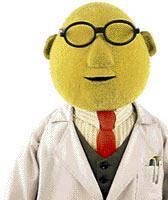
There was an odd co-incident topic sharing today between the current comic for Indexed and a story about the fact that several families in the US are currently going to trial cover the fact that the families have withdrawn from medicine to heal their children with prayer resulting in the deaths of the children. In an issue relating Science and Religion as emotional as this where it involves the death of children I would never reduce the pain of the families to something to joke about. I would note however that the Indexed cartoon clearly indicates that prayer is not an effective route to a solution to a problem. This separation model for the roles of Faith and Science is one that we will see again.
You might remember that I said in the first lecture that some would argue that the measure of religious faith and conviction is not to be willing to die for your faith but to be willing to kill. I guess I have to set that measure aside for this kind of faith that would allow your child to die in misery. This just sets the faith / conviction bar too high for me.
LINK TO ARTICLE ON FAMILIES IN COURT
You might remember that I said in the first lecture that some would argue that the measure of religious faith and conviction is not to be willing to die for your faith but to be willing to kill. I guess I have to set that measure aside for this kind of faith that would allow your child to die in misery. This just sets the faith / conviction bar too high for me.
LINK TO ARTICLE ON FAMILIES IN COURT
Making Connections: Rosalind Franklin
The lecture was intended to provide us with a platform to discuss the nature of truth and goodness in Science (and their opposites: falsehood and evil). The replacement of the emotive and relational nature of goodness and truth in the Judeo-Christian culture that we have been raised in with the dispassionate and objective ideals of Science wrecks once again on the failure of human nature to ever completely follow the whispers of our "greater angels". It was ever thus.
So we have to deal with reality in all its messy details. In "The Race for the Double Helix" the science myth is created where Watson and Crick are self revealed as lying, thieving, glory hounds. Since this is self revealed it must be true for who would promote a historical account of themselves that makes them seem foolish. Odd ... that argument seems strangely like the argument that the disciples must have been telling the truth when they recorded the New Testament accounts that make them all look like stupid, lying, thieving glory hounds.In any event it was important for us to see how two accounts of the same events, even with many of the principle players still alive and involved in the accounts, can be different in both tone and content.


It is interesting however that just recently the New York Times published an article that referenced Rosalind Franklin. It would appear that in some of the sciences there continues to be an unexplained exit of female scientists. One of the organizations that promotes the role of women in Science turns out to be the Rosalind Franklin Society.
LINK TO ARTICLE ON WOMEN IN SCIENCE
If we understand her at all after all these years since her death I doubt that she would want us to shed a tear for her or waste our time on pity but the seize the day that we have been given.
PS there is a line in the NYT article that describes the relative difficulty level of physics, chemistry and biology and the writer in describing chemistry says "the fact that women earn half of the undergraduate degrees in chemistry, which is not quite plush toy material." LOL
Monday, January 12, 2009
Leture Notes: Water "The Bible and Science"
Our first source in this course comes to us from the more conservative, evangelical Christian end of the philosophical spectrum. We should be fair to the source and note that any source that has the words "... Made Easy" in the title is not intending to take us into the deep water. No, the intention in this pamphlet is to guide the reader in a series of reflections on the Creation and what it says about the Creator. Along the way there will be the odd mention of the possibility of people who might have different positions on some of these issues ... but they are all damned and going to Hell so we really do not need to worry about them.The thinking university student needs to look at this source in the same way that you would a wolf in sheep's clothing. It is clear that the author is speaking from a biased position and is dismissive of other positions held even by those of the Christian faith. Being right does not mean you no longer should be fair or just (and I am not even going to allow that it is a or the right position ... I'm just sayin'). It most certainly is not an attitude that conforms to any liberal arts tradition or ideals.
What should you take away from this source? This source is the easiest to identify the authors position and bias. It will get steadily more difficult to do so as we progress through the sources in this course. But then again most Fundamentalist writers have the grace and subtlety of a boot to the head. It's true! I know I have a reputation for hyperbole and digression but really most Fundamentalist / Creationist authors write as if they did most of their work in the bathroom (by the way this is a tradition that goes way back the great Martin Luther was the 14th century version of Hank Hill's boss Mr. Buck Strickland).
In addition, I do like how Water takes us back over and over to the Creation as a guide to the attributes of the Creator. We are told in Scripture that indeed this is a correct and good thing to do. The source is not intended to be deep and is intended to provide comfort for a given faith position. That does not make anything in the source wrong but it does give us a reference point for comparison with other sources.
We needed to start somewhere. So from now on you can say ... "Water indicated that ..." and be comfortable that the position stated comes from a conservative - fundamentalist point of view. Get your boots on 'cause the mud only gets deeper from here on out.
Lecture Notes: The Socratic Method

So, we start the course again. We are at the beginning so now if the time to start good habits and eliminate bad ones. The readings in this course have a way of building up and can overwhelm you if you let them slide more than a week or two.
The lectures will follow the Socratic Method in terms of style following a form laid down by yet another dead Greek ... Socrates. Just once it would be nice to reference a living Greek. In any event this is the description of his method.
"To illustrate the use of the Socratic method; a series of questions are posed to help a person or group to determine their underlying beliefs and the extent of their knowledge. The Socratic method is a negative method of hypothesis elimination, in that better hypotheses are found by steadily identifying and eliminating those which lead to contradictions. It was designed to force one to examine one's own beliefs and the validity of such beliefs. In fact, Socrates once said, "I know you won't believe me, but the highest form of Human Excellence is to question oneself and others.""
Now, to be fair, in my opinion the Socratic Method is a bit aggressive and students can be a bit intimidated. You should come to class expecting to be asked questions. The first part of the lecture will be the easy stuff ... what did the source actually say and this. We will then likely have a class exercise : assignment or debate and finish with an analysis of the source for the day.
But Prof. H. I hear you say ... I am just a timid woodland creature and do not have an opinion until you tell me what it is. Well, to paraphrase the immortal Soup Nazi ...
So, in the face of such a harsh system what is a poor student to do?
1) Read the source
2) Know the source
3) Form an opinion
4) Ask questions and make comments (this last point is an important one, in past years I have had students that had the knowledge base of a well trained Labrador Retriever but they still had exceptional subjective evaluations because they would ask questions. I have also had students that easily threw away 10% of their final mark (three whole grade fractions) because they refused to particpate). You get to decide. Decide well.
Sunday, December 28, 2008
We Have to Draw the Line Somewhere Don't We?
In our course on the relationship of Christianity with the Natural Sciences we are going to be exposed to a wide spectrum of theist-agnostic-atheist thought. Even within the theist camp we will see a significant variation in thought.
There is a blog by Chet Raymo that I keep an eye on and he posted a thoughtful response that he titled Capax Dei on recent changes of thinking in the Catholic Church. LINK TO POST. He makes reference to the current Pope's position on Science and Faith which is interesting in it's own right.
While Raymo's blog makes for interesting reading, and is definitely a position that we will need to deal with in our course, it does beg the question of where we draw the line between conservative evangelical theism and liberal theism. I think that his revised Creed at the end makes the line clear for us. I will reproduce it here:
"We believe in God, the source and animator of heaven and earth, and all that is seen and unseen.
We honor the personhood of Jesus Christ, light of the world, who gave his name and inspiration to the Christian fellowship, and who taught us to love all women and men as we love ourselves. For us he made the ultimate sacrifice, that we might live more freely and graciously.
His spirit lives on, in the mystical body of the Church. Together, in his name, we celebrate the mystery of life, and await the time when his dream of universal peace is fulfilled.
With the water of Baptism we affirm our desire to wash away our sins and live the love he exampled in his life. In remembrance of him, we share together the bread and wine of the Eucharist, and invite all persons of good will, regardless of faith, to join our table.
We commit ourselves for as long as we shall live to the continuance of his message of charity and hope, to provident stewardship of the planet, and to the fulness of life in the terrestrial world to come.
Amen"
There is a blog by Chet Raymo that I keep an eye on and he posted a thoughtful response that he titled Capax Dei on recent changes of thinking in the Catholic Church. LINK TO POST. He makes reference to the current Pope's position on Science and Faith which is interesting in it's own right.
While Raymo's blog makes for interesting reading, and is definitely a position that we will need to deal with in our course, it does beg the question of where we draw the line between conservative evangelical theism and liberal theism. I think that his revised Creed at the end makes the line clear for us. I will reproduce it here:
"We believe in God, the source and animator of heaven and earth, and all that is seen and unseen.
We honor the personhood of Jesus Christ, light of the world, who gave his name and inspiration to the Christian fellowship, and who taught us to love all women and men as we love ourselves. For us he made the ultimate sacrifice, that we might live more freely and graciously.
His spirit lives on, in the mystical body of the Church. Together, in his name, we celebrate the mystery of life, and await the time when his dream of universal peace is fulfilled.
With the water of Baptism we affirm our desire to wash away our sins and live the love he exampled in his life. In remembrance of him, we share together the bread and wine of the Eucharist, and invite all persons of good will, regardless of faith, to join our table.
We commit ourselves for as long as we shall live to the continuance of his message of charity and hope, to provident stewardship of the planet, and to the fulness of life in the terrestrial world to come.
Amen"
Wednesday, December 17, 2008
A Time to Pick Up Stones: The Heavens Pour Forth
It is time to re-activate this blog for the Christianity and Natural Sciences course for the coming semester. I will be posting mostly comments and internet links on this blog related to Faith and Science issues. These links and posts may be part of classroom discussions.

A writer for Discover Magazine has selected the 10 most amazing astronomy photographs of 2008. The one above spoke to me but they are all pretty astonishing. I especially like the image of a exploding star from the other side of the Universe (the light would have had to start more than 4 billion years before our star the Sun formed). But the one I have to post is the one above of a spiral galaxy among other spiral galaxy. If you got far enough away from our Milky Way Galaxy this is what home would look like. It is so beautiful and complete one would assume it is a cheap starfield background painting but not only is it real it was taken with a ground based telescope. Beautiful, simply beautiful.
It is a bit gimmicky but this little video of the Moon passing across the face of the Earth as seen from a satellite sent to look at comets is kinda neat also.
Saturday, August 30, 2008
Galileo In the News
Galileo made the list of "50 must read" books for all educated people according to the Globe and Mail.
I like this statement that makes him sound like a early version of Carl Sagan ...
"Unlike other scientific tomes of its time, which were written in Latin and addressed a scholarly audience, the Dialogue spoke in Italian to an underserved public of intelligent, curious laymen who couldn't afford a university education. Galileo's direct appeal to this mass market fanned the church's anxieties over the message his Dialogue delivered."

I like this statement that makes him sound like a early version of Carl Sagan ...
"Unlike other scientific tomes of its time, which were written in Latin and addressed a scholarly audience, the Dialogue spoke in Italian to an underserved public of intelligent, curious laymen who couldn't afford a university education. Galileo's direct appeal to this mass market fanned the church's anxieties over the message his Dialogue delivered."

Subscribe to:
Posts (Atom)